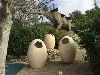
Hey there, fellow dinosaur enthusiasts! As a supplier of Dinosaur Egg Nest, I've always been fascinated by the prehistoric world and the incredible creatures that once roamed our planet. One question that often pops up in my mind and in conversations with customers is: how did the size of dinosaurs affect the size of their egg nests? Let's dive into this exciting topic and explore the science behind it.
Understanding Dinosaur Sizes
Dinosaurs came in all shapes and sizes, from the tiny Microraptor, which was about the size of a crow, to the colossal Argentinosaurus, which could reach lengths of over 100 feet and weigh as much as 100 tons. Their diverse sizes were a result of a variety of factors, including their diet, environment, and evolutionary adaptations.
Larger dinosaurs, like the long - necked sauropods, needed to consume vast amounts of vegetation to sustain their massive bodies. This led to a high metabolic rate and required them to grow quickly during their early life stages. Smaller dinosaurs, on the other hand, had different dietary needs and growth patterns. Some were carnivores, preying on insects or small mammals, while others were herbivores that ate plants in smaller quantities.
Egg Nest Sizes and Dinosaur Sizes
The size of a dinosaur's egg nest was closely related to the size of the dinosaur itself. Larger dinosaurs generally laid larger eggs, which in turn required larger nests. Sauropods, for example, laid eggs that were relatively small in comparison to their body size, but they laid a large number of them. Their nests were often large, shallow depressions in the ground. These nests could cover a significant area, sometimes up to several meters in diameter.
The reason for the large nests of sauropods was likely to accommodate the large number of eggs they laid. By spreading the eggs out in a large area, they reduced the risk of all the eggs being damaged by a single event, such as a predator attack or a natural disaster. It also provided better ventilation for the eggs, which was crucial for the development of the embryos inside.
In contrast, smaller dinosaurs typically laid fewer eggs, and their nests were correspondingly smaller. Some small theropod dinosaurs laid clutches of only a few eggs, and their nests were often simple depressions in the soil or even in the hollows of trees. These nests were just big enough to hold the eggs and provide a certain degree of protection.
Factors Influencing Nest Size
It's not just the size of the dinosaur that determined the size of the egg nest. There were other factors at play as well. The environment in which the dinosaurs lived was a major factor. In areas with abundant vegetation and soft soil, dinosaurs could easily dig large nests. For example, in floodplain environments, the soft sediment was ideal for sauropods to create their large, shallow nests.
Predation pressure also influenced nest size. In regions where there were many predators, dinosaurs might have built larger nests to make it harder for predators to find and destroy all the eggs. They could also use the size of the nest to their advantage by creating a more complex structure that was difficult for predators to navigate.
Our Offerings as a Dinosaur Egg Nest Supplier
As a supplier of Dinosaur Egg Nest, we understand the importance of recreating these amazing prehistoric structures. Our nest designs are based on the latest scientific research, so you can be sure that they are as accurate as possible.


We also offer other related products, such as Fiberglass Dinosaur Chair and Dinosaur Egg for Taking Picture. These products are perfect for museums, theme parks, and even private collectors who want to add a touch of the prehistoric world to their spaces.
Our fiberglass products are not only realistic but also durable. They can withstand different weather conditions, making them suitable for both indoor and outdoor use. Whether you're looking to create a life - sized dinosaur exhibit or just want a small decorative piece, we have something for you.
Why Choose Our Dinosaur Egg Nests?
One of the reasons to choose our dinosaur egg nests is our commitment to quality. We use high - quality fiberglass materials that are molded to look exactly like the real thing. The details on our eggs and nests are astonishingly accurate, from the texture of the eggshells to the shape of the nest.
Another advantage is our customization options. We know that every customer has different needs, so we can customize the size, color, and even the number of eggs in the nest according to your requirements. This means that you can get a unique dinosaur egg nest that perfectly fits your project.
Getting in Touch for Purchasing
If you're interested in our Dinosaur Egg Nest, Fiberglass Dinosaur Chair, or Dinosaur Egg for Taking Picture, don't hesitate to get in touch. We're always ready to have a chat about your project and see how we can help you bring your prehistoric vision to life. Whether you're a museum curator, a theme park designer, or just a dinosaur lover, we're here to work with you.
References
- Britt, B. B., Chure, D. J., & Carpenter, K. (1997). The sauropod nest hypothesis: A critical review. Gaia, 13, 131 - 144.
- Varricchio, D. J., Martin, T., & Lamanna, M. C. (2008). Nesting strategies in small versus large dinosaurs. In H. G. Mayr, D. J. Varricchio, & M. A. Norell (Eds.), Mesozoic Birds: Above the Heads of Dinosaurs (pp. 173 - 187). University of California Press.
- Deeming, D. C. (2006). The evolution of avian incubation: Behavior, environment, and temperature. The Auk, 123(3), 905 - 912.