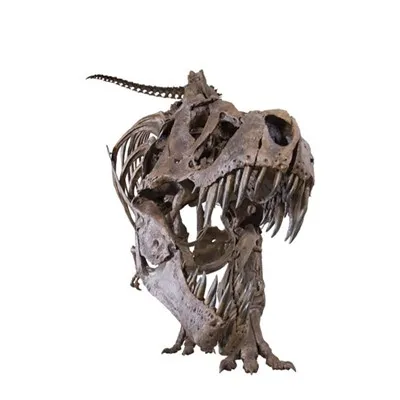
Ever since humans discovered dinosaurs, scientists have never stopped studying them. As time goes by and science and technology advance, our understanding of dinosaurs becomes clearer and clearer. While scientists are studying dinosaurs, they have also gained knowledge about geology, biology, astronomy, environment and other aspects, allowing humans to clearly know how to maintain harmony with nature when fighting against it. In future research work, our "scientists" will definitely further uncover the secrets of dinosaurs. At present, scientists study dinosaurs mainly by relying on the remains (remains), remains (skin, footprints), and abandoned objects (eggs and feces) fossils they left in the rock formations.
Do you know where the earliest named dinosaur in China was discovered?
As one of the most important dinosaur producing areas in the world, China's dinosaur fossils are found all over the country from east to west, north to south. Yunnan, Sichuan, Shandong, Inner Mongolia, Xinjiang and other places are famous for the large number of dinosaur fossils unearthed. Compared with these dinosaur provinces, Heilongjiang is a bit "obscure". But do you know? The earliest scientifically named dinosaur fossil in China was discovered in Heilongjiang Province, near a small fishing village on the bank of the Heilongjiang River. This small fishing village is Yuliangzi in Jiayin County.
It was discovered in Jiayin County, Heilongjiang Province in 1902. Due to the long-term erosion of the Heilongjiang River, the strata along both sides of the river were constantly eroded, and the dinosaur fossils buried inside were constantly washed out and exposed on the river beaches. Local fishermen were surprised when they discovered these fossils because they had never seen such thick animal bones. The news spread quickly and was heard by Russian officers on the other side, who came to investigate and collect fossils. Initially, the Russians mistook the large fossil bones for mammoths and reported them in the local newspaper in Khabarovsk, Russia. Russian geologists were attracted by this report and conducted large-scale inspections and excavations in my country for three consecutive years from 1915 to 1917, and collected a batch of dinosaur fossils. They repaired the collected fossils and equipped them with one-third plaster casts. They mounted the fossils and displayed them in the Petersburg Geological Museum. Research determined that this was a duck-billed dinosaur, 4.5 meters high and about 8 meters long. Russian geologists named it "Manchurasaurus".