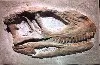
Dinosaurs as a whole were very large. By dinosaur standards, sauropods are the giants. During the long age of dinosaurs, even the smallest sauropods were larger than other animals in their habitats, and the largest sauropods were several levels larger than anything that had ever appeared on the surface.
Most dinosaurs were much smaller than the large sauropods. Existing evidence shows that the average size of dinosaurs continued to change throughout the Triassic, Early Jurassic, Late Jurassic, and Cretaceous periods. Most theropod dinosaurs weighed between 100 and 1,000 kilograms, while most Holocene predatory carnivores weighed between 10 and 100 kilograms. Estimates of the weight of dinosaurs range mostly from 1 to 10 tons. A study by the National Museum of Natural History in London pointed out that the average weight of dinosaurs was about 100 kilograms, while the average weight of new generation mammals was between 2 and 5 kilograms.
Judging from the existing skeletons in good condition, the tallest and heaviest dinosaur is Giraffatitan brancai (formerly known as Brachiosaurus brachii). Fossils of Giganotosaurus were discovered in Tanzania between 1907 and 1912. A skeleton model composed of multiple individuals of similar size is now on display at the Humboldt Museum in Berlin. The model is 12 meters high and 22.5 meters long. The expected weight of the living body is between 30 and 60 tons. The longest dinosaur is the 27-meter-long Diplodocus, which was discovered in Wyoming, USA, in 1907 and is now on display at the Carnegie Museum of Natural History in Pittsburgh, Pennsylvania.
Oct 06, 2023
Dinosaur Body Characteristics
Previous
You Might Also Like




Send Message